“This isn’t the first time. And it probably won’t be the last. But this one… this one has to be dealt with.”
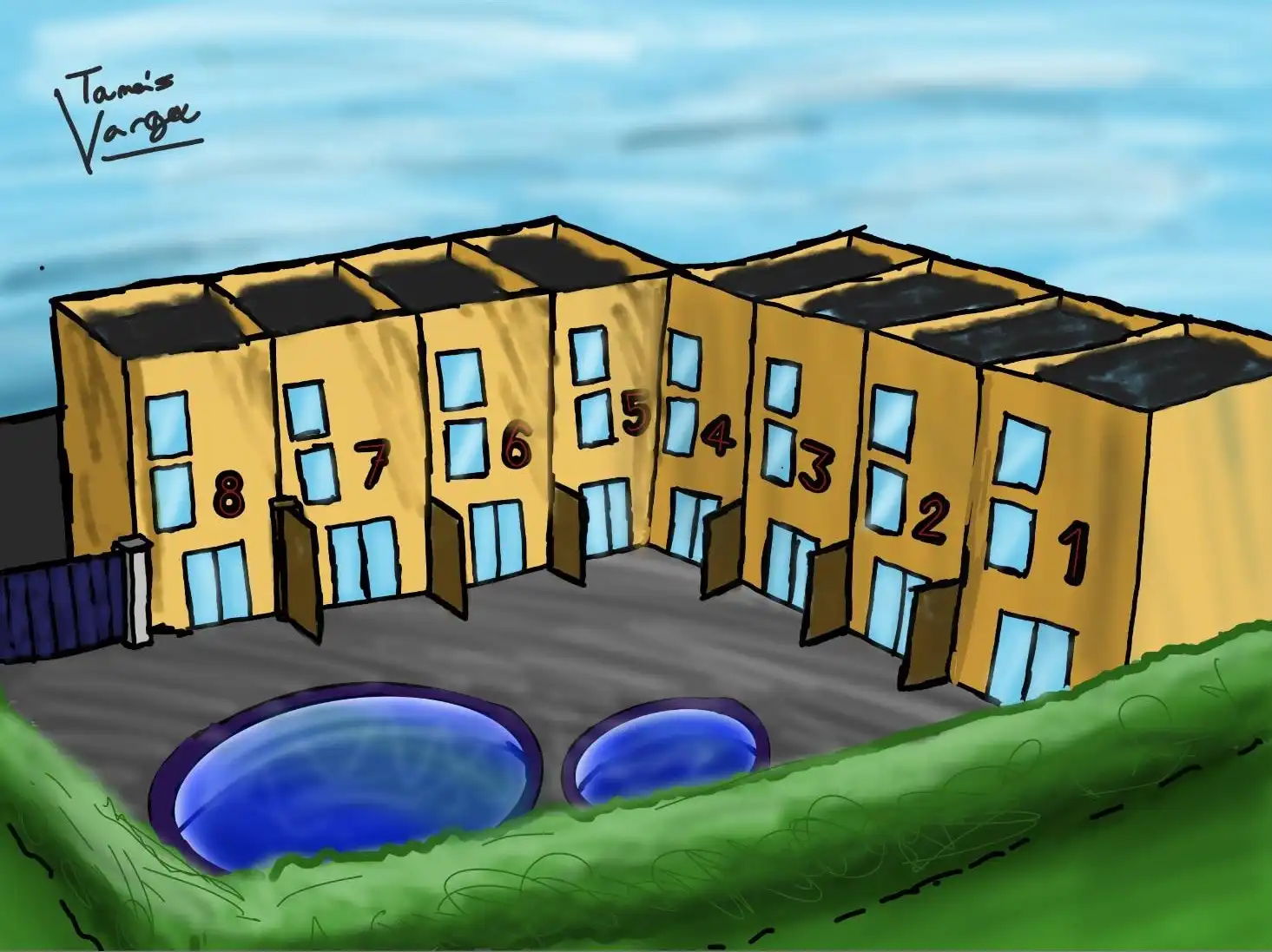
With a hollow ache in his chest, Günter stared into the darkness from the terrace. He was no longer sure it was such a good idea to sit outside and wait for Viktoria to come home. What could he possibly do at two in the morning in a housing complex where even the walls had ears? Confront her with what he knew? Or rather, with what he thought he knew? Thank God he had no concrete proof. He didn’t need it. Not for certainty, and not for his very core to collapse completely. He looked toward the far end of the complex. Somewhere in one of those houses was his wife—and who knew what she was doing there. He switched on the storm lantern fixed to the center of the garden table, but the harsh glare stung his eyes. He pulled off his T-shirt and tossed it over the light to dim it.
The faint chirping of crickets and the stillness of dawn brought back memories of their first night of doubt and sleeplessness. Back then he hadn’t even known what was happening. He only feared that the fairy tale—living happily with a beautiful woman like Viktoria—would vanish. He struggled against his tears, restless in the bed where, in the dead of night, his fiancée slipped away. When she slipped back in at daybreak as if nothing had happened, Günter said nothing. He adored her too much—the beautiful, blonde girl with smiling eyes. He told himself time would take care of it. Either they would part, or they would last forever.
Years passed before the midnight disappearance repeated itself. Uwe was already five, and Heidi still sometimes crept into their bed at night. That night he woke to his little daughter’s crying—she was searching for her mother in vain. Günter had no choice but to confront his wife. If only there had been another way! If only Viktoria had come home before Heidi went looking for her! If only she hadn’t left at all. Not then, not any other time. And certainly not now—four nights in a row…
He had sat there to wait her out, but still he flinched at the sound of nearly noiseless footsteps. He pressed his palms against his trembling knees to steady himself as his wife drew near.
“G-Günter,” Viktoria whispered.
He didn’t answer, only nodded toward the chair he had already pulled out beside him. Viktoria collapsed wearily into the rattan armchair.
“Is he still alive?” Günter asked flatly.
“What?”
He pointed at the black rubber gloves on her hands.
“Damn it…” Viktoria breathed, then peeled them off with practiced ease, careful not to touch the outside. It was clear she had done it many times before.
“Well?”
“He’s alive.”
“For how long?”
“I don’t know yet.”
“And after that?”
“I don’t know—and don’t interrogate me,” she snapped, irritation flaring. “Besides”—she sprang up from the chair—“why are we even talking out here?”
“So we are talking?”
“I don’t know. Maybe it would be better if we didn’t.”
“At least tell me who it is.”
Viktoria stopped in the terrace doorway. Her brow furrowed; it was almost visible, the way arguments and counterarguments clashed inside her. Then she lifted her sky-blue eyes to Günter and whispered, barely audible:
“Ted…”

Who is Sonja Blonde?
Curious who’s behind the stories? I’ll tell you how my passion became my career and why I write stories like these.
New episodes on Mondays and Thursdays: Emily's Diary and The Salon →